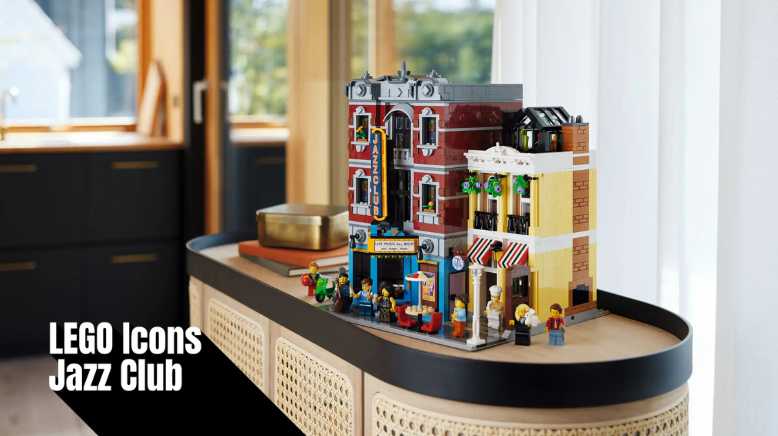
LEGO Icons Jazz Club (10312): A Smooth Finale for a Modular Classic
Published: 11 months ago
Last Updated: 7 months ago
LEGO Icons 10312 Retirement Watch: Jazz Club Investment Case
The LEGO Icons Jazz Club (10312) takes its final bow at the end of 2025, closing out another chapter in the legendary Modular Buildings Collection.
With retirement approaching fast, this is one of the top LEGO® Icons sets to secure before it leaves shelves for good.
At $229.99 / £199.99 and 2,899 pieces, this richly detailed build captures the vibrant heart of a city night — neon lights, the hum of a saxophone, and the aroma of pizza drifting from the pizzeria next door.
For investors and collectors alike, it’s both an artistic display piece and a proven category performer: modulars have averaged 18 % annualised growth across retired models, outpacing even the wider Icons theme’s 11 % long-term average.

A Spotlight on Design
The Jazz Club exemplifies why Modular Buildings remain the benchmark for LEGO’s adult fans.
It uses advanced techniques such as a 45-degree doorway, interlocking façades, and layered architectural textures to bring the lively atmosphere of a downtown music venue to life.
Inside, the three-storey build offers distinct scenes:
- A stage with microphone, drum kit, and upright bass where the band plays nightly.
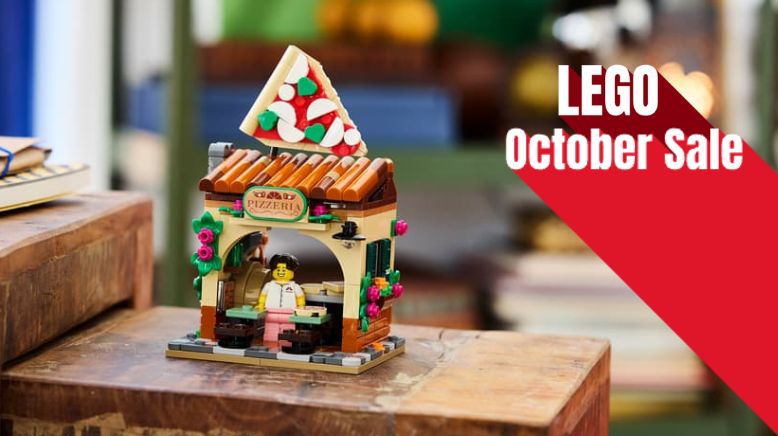
- A pizzeria next door, complete with kitchen, counter and slice-ready oven.
- A tailor’s workshop and band dressing room above, filled with accessories that reward close inspection.
Eight LEGO minifigures complete the story — the singer, bassist, drummer, chef, tailor, and more — creating a bustling ensemble worthy of any modular street lineup.
Part of a Beloved LEGO Tradition
Since 2007, the Modular Buildings Collection has set the gold standard for LEGO architecture. Sets like the Detective’s Office (10246), Downtown Diner (10260), and Brick Bank (10251) are now cornerstone investments — each having more than doubled or tripled since retirement.
| Set | RRP (USD) | Current Value (USD) | AAG % |
|---|---|---|---|
| Brick Bank 10251 | $170 | $650 | 22% |
| Detective’s Office 10246 | $160 | $473 | 18% |
| Downtown Diner 10260 | $170 | $382 | 19% |
| Police Station 10278 | $200 | $305 | 29% |
The Jazz Club continues this legacy with modern design flair and the same collector appeal. As a LEGO exclusive, production has been tightly controlled, limiting retail discounting and ensuring scarcity once it leaves shelves.
Investment Outlook
Based on historical modular performance and its exclusive status, Investabrick projects the Jazz Club to appreciate strongly after its December 2025 retirement.
Projected post-retirement values (USD):
- 1 Year – $363 (+58 %)
- 3 Years – $489 (+113 %)
- 5 Years – $586 (+155 %)
Buying at full RRP still offers strong upside, but investors targeting 10–20 % savings through LEGO Insider points or short-term promos can significantly enhance long-term returns.
Compared with other adult-targeted Icons releases, modulars consistently demonstrate both liquidity (steady resale turnover) and premium retention (sealed-box values staying firm). For long-term investors, that combination makes them one of LEGO’s most reliable categories.

Why the Jazz Club Works for LEGO Modular Investors
Two dynamics underpin Modular Buildings after retirement. First is the street-completion effect: collectors return to fill gaps because even a single missing building breaks the display run. Second is cross-era cohesion. Jazz Club’s colour blocking and architectural rhythm sit comfortably between older classics and recent entries, which broadens buyer demand over time. Thematically, it’s also a crowd-pleaser. Music, nightlife, food — these are evergreen subjects that age well, unlike trend-led designs. That combination of timeless subject matter and modular connectivity is precisely what helped Brick Bank and Downtown Diner become staples of post-retirement want lists.
For display, the footprint is substantial without being impractical, making it easy to showcase on a shelf alongside Bookshop, Police Station, and Boutique Hotel. For storage or shipment, the modular floor separation helps maintain integrity for sealed or carefully opened sets, a subtle advantage that investors appreciate during resale.
Comparator Deep Dive: Lessons from Past LEGO Modular Winners
Brick Bank’s rise was driven by distinctive façade design and rich interiors that rewarded close inspection — a pattern echoed here with the club stage, backstage dressing room and the working pizzeria oven. Detective’s Office sustained demand thanks to storytelling and interconnected rooms; Jazz Club leans into the same narrative approach, turning a display model into a mini diorama packed with storytelling hooks. Downtown Diner modernised the line with bolder colours and a lifestyle theme; Jazz Club delivers that same “personality pop,” but in a timeless, classic city palette that doesn’t date.
What this means for investors is simple: the more a modular can serve both as a display anchor and as a narrative-rich vignette, the longer its tail in the aftermarket. Jazz Club checks those boxes, which is why its forward projections align so closely with modular precedent.
Buy Window, Sell-Out Timing & Entry Strategy
Stock on retiring LEGO exclusives can disappear quickly in Q4, and modulars are notorious for last-minute rushes as AFOLs scramble to avoid paying aftermarket premiums. With retirement scheduled for the end of 2025, a sell-out before or during the holidays is a realistic scenario. If you’re targeting multiples, phase purchases to take advantage of occasional points events or small GWPs to lower cost basis — without delaying so long that you risk missing sealed copies.
Entry price matters, but timing matters more. Our projections already assume RRP-based entry; any discount or points value simply compounds the upside. If you’re building a modular portfolio, consider pairing Jazz Club with a second end-of-2025 retirement to diversify (e.g., a historical or licensed flagship) while keeping your capital working on similar cycles.

Risks & How They’re Mitigated
Every LEGO investment carries some risk: surprise reissues, short-term macro softness, or a late restock. Modulars mitigate these better than most adult-targeted lines because of persistent collector demand and the need to “complete the street.” Another common concern is that non-licensed designs might lack long-term pull — yet history shows the opposite for modulars, where architecture, not IP, drives longevity. The scarcity mechanics of LEGO exclusives do the rest once the “sold out” tag lands.
Exit Strategy & Collector Appeal
The Jazz Club strikes a balance few sets achieve: it’s photogenic enough for display yet compact enough to store or ship easily — a key advantage in the secondary market.
Collectors prize modular continuity, meaning missing even one annual release breaks the street display; this built-in demand repeatedly fuels post-retirement value spikes.
For builders, the charm is evergreen — classic architecture, musical nostalgia, and colour tones that complement both older and newer modulars. Whether viewed as an investment or a centrepiece build, this is a set destined to keep playing long after it leaves LEGO.com.
Exit Timing Guidance: Expect a solid post-retirement pop as residual stock clears, followed by steady appreciation through years 3–5. The ideal hold period is three to five years, though shorter-term flips are also likely to prove profitable given typical modular demand patterns.
Final Thoughts
As 2025’s retirements approach, the LEGO Icons Jazz Club (10312) stands out as the definitive modular to own.
It embodies everything that makes the series a favourite among adult fans: depth of detail, personality in every floor, and a timeless theme that resonates beyond the build.
Once it’s gone, expect prices — and the music — to rise in harmony.
Author: Jason Carden
Jason’s background in web design and photography gives him a natural eye for detail, presentation, and storytelling. His AFOL journey began when he rebuilt some of the classic sets he remembered longing for as a child in the 1980s. What started as nostalgia quickly became a serious collecting habit. Jason’s collection reflects LEGO’s golden eras, with a particular love for Classic Space, Pirates, and early Technic. He enjoys exploring how LEGO design has evolved and documenting the history behind iconic sets.
See Jason's Articles